In materials science, crystal growth is the process of arranging atoms or molecules into highly-ordered solid structures. For example, the Czochralski and Kyropoulos methods are used to produce crystals for a wide range of end uses. The crystal structures produced give materials predictable electrical, optical and mechanical properties – which is why crystals sit at the heart of technologies we use every day.
Industrially-grown crystals are found in smartphones, computers, LED lighting, medical imaging equipment and advanced sensors. Using the Czochralski method, silicon crystals form the wafers used in semiconductors. Here, a tiny seed crystal is introduced into a molten feedstock and slowly pulled upwards.
With the Kyropoulos method, sapphire crystals are grown for scratch‑resistant screens and optical windows. The seed crystal grows downwards as the melt temperature is slowly reduced. Both methods involved heating raw materials to exceptionally high temperatures. The molten materials can be highly corrosive and reactive, which is why specialist instruments are needed.
Ideal properties
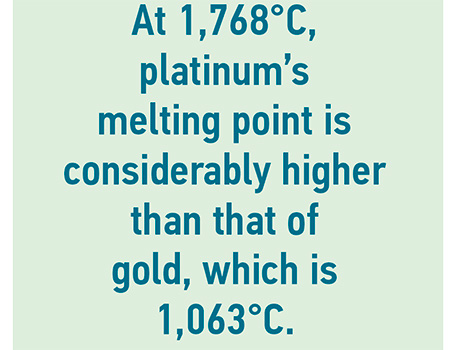
With its high melting point (1,768°C), platinum is non‑reactive and stable, retaining its strength at extreme temperatures. These properties make it ideal for the crucibles used to hold and shape molten materials during crystal growth. Importantly, platinum does not contaminate the growing crystal, helping achieve the ultra‑high purity the end applications demand.
The link between platinum and crystal growth is not new. As early industrial crystal growing techniques emerged in the late 19th and early 20th centuries – alongside the development of electric lighting, optics and early electronics – platinum crucibles became essential laboratory and production tools. As crystal sizes increased and industrial demand grew after the Second World War, platinum’s role expanded with it.
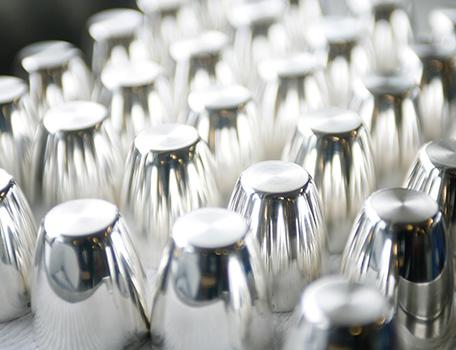
Crucibles are not the only platinum products used in crystal growing. Often the hydraulic stylus that manipulates the seed crystal is comprised of platinum, as are the protective baffles used to limit the outward radiation of heat. These components are engineered from semi-finished platinum components like wires, ribbons, and sheets. Today, other platinum group metals, including iridium and rhodium, can be alloyed with platinum to further enhance strength and lifetime under extreme conditions.