Platinum glass demand is forecast to increase by 83% year-on-year to 377 koz in 2026, recovering from a low base of 206 koz in 2025 due to the cyclical absence of net new fibreglass capacity expansion last year. Growth will be driven by renewed expansion in fibreglass applications, supported by the return of capacity additions and stronger demand from higher value end-uses, including those linked to artificial intelligence (AI).
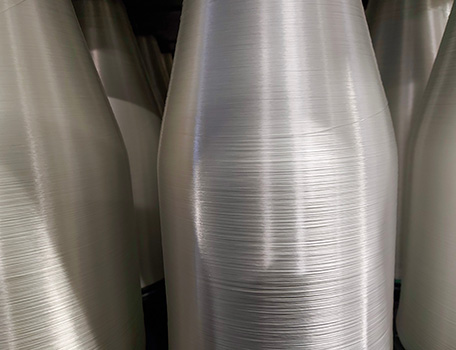
A unique feature of platinum is that it is a metallic element that is exceptionally resistant to heat and wear. In fibreglass production, platinum-rhodium bushings are used to draw molten glass into fine fibres at extremely high temperatures. Fibreglass produced this way is used to produce electrical-grade glass (E-glass) yarn which can be woven to create different types of E-glass fabric.
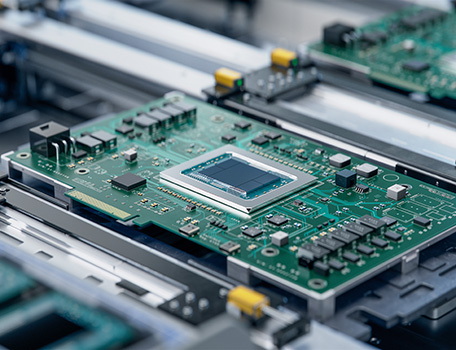
Known for its high strength and excellent electrical insulation, E-glass fabric is an important component in a printed circuit board (PCB), an electronic assembly that uses copper conductors to create electrical connections between components, allowing advanced semiconductors to communicate with each other at very high data rates. In a PCB, E-glass fabric is impregnated with epoxy resin and layered to form a substrate, the structural base of the PCB. Its job is to provide mechanical stability while ensuring the board can withstand heat and electrical stresses.
Low loss material
Glass composition, thickness specification and weaving technology can all be altered during the E-glass manufacturing process to create materials with different characteristics. E-glass fabric in PCBs has been developed to exhibit low dielectric constant/low loss (low-Dk) properties to meet the demands of new technologies. Among other benefits, low-DK materials provide fast signal transmission and reduced signal loss.
Printed circuit board. Picture credit: IM Imagery - stock.adobe.com
AI servers and data centre equipment cannot function without PCBs and, as AI workload increases, PCB designs are evolving to support higher speeds and frequencies, especially through the integration of low-Dk materials.
Elsewhere, E-glass is the most widely used reinforcement fibre in polymer matrix composites (PMCs). PMCs are high-performance engineering materials consisting of reinforcing fibres (such as carbon, glass or aramid) bound together by a polymer resin matrix. Kevlar®, developed by DuPont, is an example of a fabric produced from aramid fibres. PMCs are widely utilised across aerospace, automotive, and sporting goods industries due to their exceptional strength-to-weight ratio, design flexibility, and corrosion resistance.