Higher PGM prices support recycling supply growth, but headwinds remain
16 April 2026
In response to higher prices, recycling is expected to underpin PGM supply growth in 2026f. However, working capital finance headwinds, and trade flow restrictions across the Middle East are emerging risks to our supply growth forecasts. Recycling supply missing projections would continue a trend of it underperforming expectations since 2022, reinforcing recognition of constrained total platinum supply.
Individual prices in the 3E PGM basket have increased by 50% to 100% over the past year (Fig. 3). Theoretically, higher prices should illicit a supply response. However, supply growth is only expected from recycling as the latest production guidance from miners shows declining output for FY ’26f (Fig. 4). We have previously discussed recycling as being price elastic (link) and thus expect recycling supply to increase by 10% y/y in 2026f following a 10% y/y increase in 2025. Notwithstanding recycling growth in 2025, automotive recycling supply growth has frequently missed expectations.
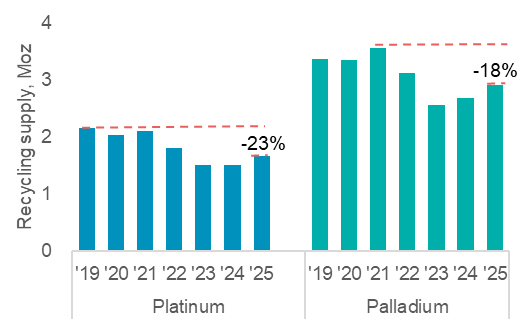
When our initial forecasts are compared to actual supply outcomes since 2022, platinum recycling supply has been, on average, 9% lower than expected (Fig. 1). Constrained recycling (Fig. 2) has occurred for two principal reasons. Firstly, when the new car market was impacted by supply chain disruptions and rising selling prices (Fig. 5), consumers held onto their cars for longer thereby restricting the supply of spent autocatalysts. Secondly, in 2023 and 2024, depressed PGM prices limited the economic incentive to recycle leading some scrapyards to hoard autocatalysts (Fig. 6).
Figure 1. Platinum recycling has underperformed forecasts
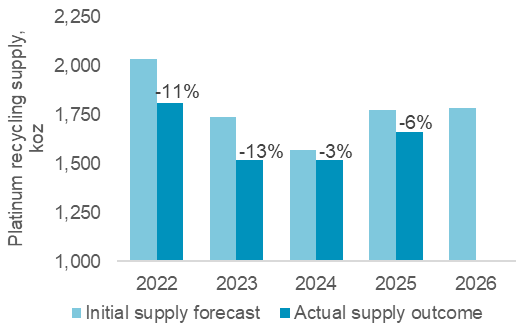
Figure 2. Recycling supply has been constrained
Several constraints to recycling supply have alleviated, with robust PGM prices clearly incentivising the release of spent autocatalysts which may have been hoarded during recent price troughs. However, with its recent track record of undershooting expectations, two emerging risks may constrain expected PGM recycling supply growth.
Firstly, the industry is reportedly facing working capital constraints due to higher PGM prices and interest rates with banks being cautious in extending credit facilities, limiting potential output. Secondly, the contagion of the Iran War across the strait of Hormuz is impacting trade across the Middle East. The UAE has developed into reasonably sized aggregation hub for automotive PGM recycling, and a protracted conflict may restrict metal flows. Another aspect which could weigh on recycling supply, would be a conflict-led slowdown in the new vehicle market. Were this to occur, we would concurrently expect an automotive demand impact.
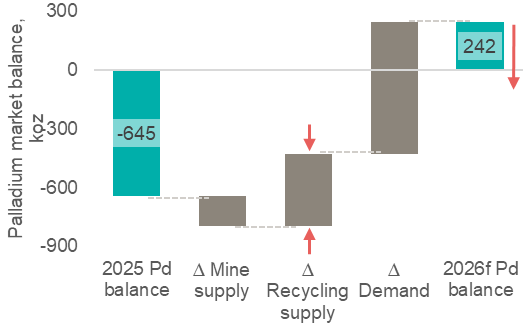
PGM markets have been plagued by supply constraints in recent history. Accordingly, further recycling underperformance would add to the 240 koz platinum market deficit forecast in 2026f (Fig. 7) and could result in palladium remaining in deficit rather than transitioning to a surplus in 2026f (Fig. 8).
Platinum’s attraction as an investment asset arises from:
- WPIC research indicates that the platinum market entered a period of consecutive supply deficits from 2023, although a smaller deficit is forecast in 2026 it is not expected to alleviate current market tightness
- Platinum supply remains challenged, materially for mining supply, less so for recycling supply
- Platinum’s end markets are the most diversified of PGMs which is supportive of long-term demand and mitigates future downside risks from external events (Iran War) or structural trends (drivetrain electrification)
- Elevated lease rates and OTC London backwardation highlight sustained tight market conditions
- The platinum price remains significantly below the price of gold
Figure 3: PGM prices have increased by between 50% (Pd) to 100% (Pt) over the past twelve months
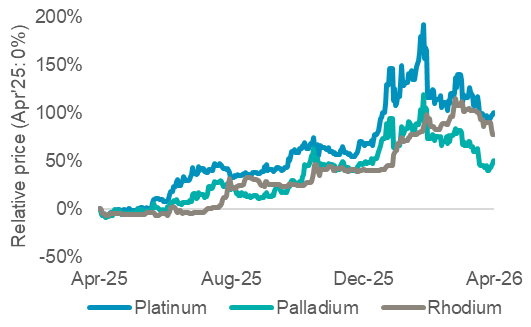
Figure 4: Key PGM miners are, in aggregate, guiding for FY’26f refined production to decline by 4% versus FY’25
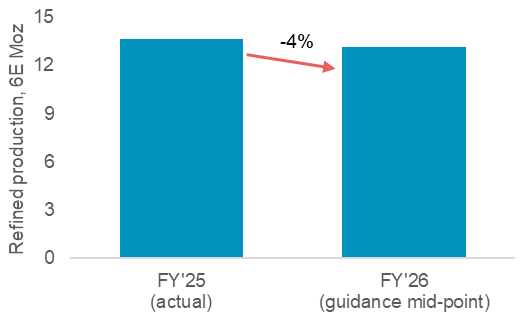
Figure 5: The Covid/semiconductor-driven slowdown in new car production reduced end-of-life vehicle scrapping and spent autocatalyst supply
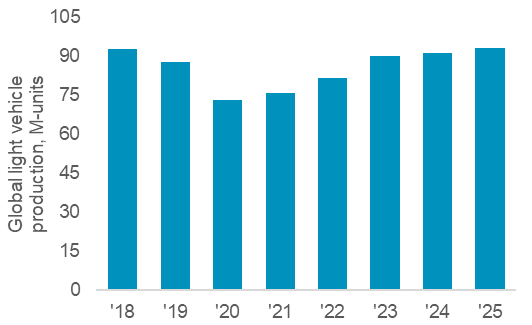
Figure 6: Depressed PGM prices in 2023 and 2024 reduced the economic incentive to recycle leading to hoarding by scrapyards
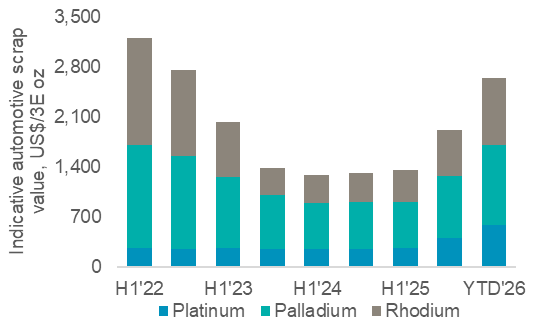
Figure 7: Should recycling supply growth underperform expectations, it would support a mildly deeper platinum market deficit in 2026f, whereas…
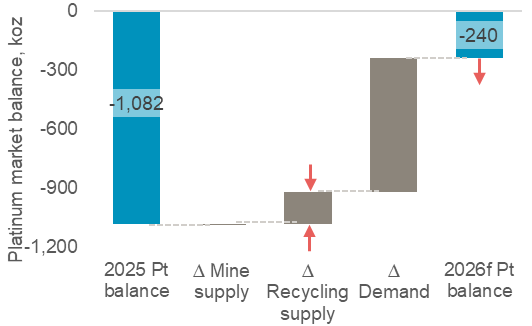
Figure 8: …Should palladium recycling supply growth underperform expectations, it may support markets remaining in deficit versus transitioning to surplus in 2026
IMPORTANT NOTICE AND DISCLAIMER: This publication is general and solely for educational purposes. The publisher, The World Platinum Investment Council, has been formed by the world’s leading platinum producers to develop the market for platinum investment demand. Its mission is to stimulate investor demand for physical platinum through both actionable insights and targeted development: providing investors with the information to support informed decisions regarding platinum; working with financial institutions and market participants to develop products and channels that investors need.
This publication is not, and should not be construed to be, an offer to sell or a solicitation of an offer to buy any security. With this publication, the publisher does not intend to transmit any order for, arrange for, advise on, act as agent in relation to, or otherwise facilitate any transaction involving securities or commodities regardless of whether such are otherwise referenced in it. This publication is not intended to provide tax, legal, or investment advice and nothing in it should be construed as a recommendation to buy, sell, or hold any investment or security or to engage in any investment strategy or transaction. The publisher is not, and does not purport to be, a broker-dealer, a registered investment advisor, or otherwise registered under the laws of the United States or the United Kingdom, including under the Financial Services and Markets Act 2000 or Senior Managers and Certifications Regime or by the Financial Conduct Authority.
This publication is not, and should not be construed to be, personalized investment advice directed to or appropriate for any particular investor. Any investment should be made only after consulting a professional investment advisor. You are solely responsible for determining whether any investment, investment strategy, security or related transaction is appropriate for you based on your investment objectives, financial circumstances and risk tolerance. You should consult your business, legal, tax or accounting advisors regarding your specific business, legal or tax situation or circumstances.
The information on which this publication is based is believed to be reliable. Nevertheless, the publisher cannot guarantee the accuracy or completeness of the information. This publication contains forward-looking statements, including statements regarding expected continual growth of the industry. The publisher notes that statements contained in the publication that look forward in time, which include everything other than historical information, involve risks and uncertainties that may affect actual results. The logos, services marks and trademarks of the World Platinum Investment Council are owned exclusively by it. All other trademarks used in this publication are the property of their respective trademark holders. The publisher is not affiliated, connected, or associated with, and is not sponsored, approved, or originated by, the trademark holders unless otherwise stated. No claim is made by the publisher to any rights in any third-party trademarks
WPIC Research MiFID II Status
The World Platinum Investment Council -WPIC- has undertaken an internal and external review of its content and services for MiFID II. As a result, WPIC highlights the following to the recipients of its research services, and their Compliance/Legal departments:
WPIC research content falls clearly within the Minor Non-Monetary Benefit Category and can continue to be consumed by all asset managers free of charge. WPIC research can be freely shared across investment organisations.
- WPIC does not conduct any financial instrument execution business. WPIC does not have any market making, sales trading, trading or share dealing activity. (No possible inducement).
- WPIC content is disseminated widely and made available to all interested parties through a range of different channels, therefore qualifying as a “Minor Non-Monetary Benefit” under MiFID II (ESMA/FCA/AMF). WPIC research is made freely available through the WPIC website. WPIC does not have any permissioning requirements on research aggregation platforms.
- WPIC does not, and will not seek, any payment from consumers of our research services. WPIC makes it clear to institutional investors that it does not seek payment from them for our freely available content.
More detailed information is available on the WPIC website:
https://www.platinuminvestment.com/investment-research/mifid-ii
Contacts:
Edward Sterck, Research, [email protected]
Wade Napier, Research, [email protected]
Brendan Clifford, Head of Institutional Distribution, [email protected]
WPIC does not provide investment advice.
Please see disclaimer for more information.