An ‘artificial nose’ that can detect scent is closer to becoming a reality. This follows the development of a platinum-based molecule that works as a sensor to detect hard-to-differentiate volatile scent compounds, known as terpenes. Terpenes are responsible for, among other things, the scents of plants, resins or citrus fruits. Many terpenes exist in two mirror-image forms, called enantiomers.
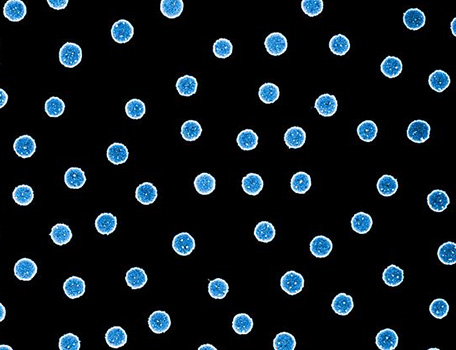
The platinum-based sensor molecule has a fixed, three-dimensional shape and can combine with other identical molecules to form tiny, stack-like nanostructures. Upon interaction with volatile scent compounds, the arrangement of the platinum molecules changes — and this response differs depending on which scent is present. The change in the sensor molecules can also be reversed. Once the scent compounds are removed, the molecules return to their initial state and can be used again.
The development, from researchers at Switzerland’s University of Basel, provides a basic functional principle for future sensor systems that could ‘smell’. Systems of this kind would have potential applications in environmental analysis, quality control or the investigation of atmospheric processes — without the need for elaborate measuring equipment.
Demand for hydrogen sensors
Meanwhile, researchers at Chalmers University of Technology, Sweden, have produced a new hydrogen gas sensor that is well-suited to humid environments – actually performing better the more humid it gets. The performance of existing hydrogen gas sensors can be impaired when in humid environments, which is a challenge because where there is hydrogen, there is very often humidity.
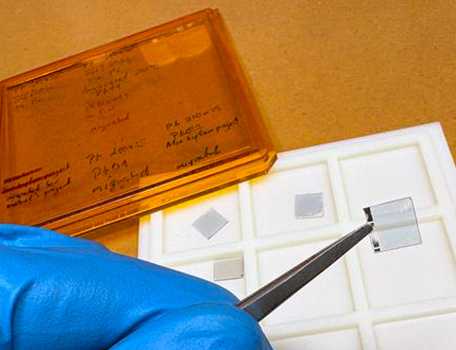
A new platinum-based hydrogen sensor has been recently developed. Picture credit: Chalmers University of Technology | Mia Halleröd Palmgren
The new humidity-tolerant hydrogen sensor fits on a fingertip and contains nanoparticles of platinum. The particles act as both catalysts and sensors at the same time. This means that the platinum accelerates the chemical reaction between hydrogen and oxygen from the air, which leads to heat development that causes the humidity, in the form of a film of water on the sensor surface, to ‘boil away’.
The amount of hydrogen in the air determines how much of the water film boils away, and the moisture content in the air controls the thickness of the film. It is therefore possible to measure the concentration of hydrogen by measuring the thickness of the water film, and since the thickness of the water film increases as the air becomes more humid, the sensor’s efficiency increases at the same rate.
There is currently strong demand for hydrogen sensors that perform well in humid environments, especially as hydrogen plays an increasingly important role in society due to the energy transition. Effective hydrogen sensors are required to detect leaks and prevent the formation of flammable oxyhydrogen gas when hydrogen is mixed with air.