
25 September 2026: The potential reemergence of debasement concerns could override rate hikes, boosting platinum investment: The macroeconomic and macropolitical environments are pushing in different directions with divergent outcomes on precious metal value establishment. Fed rate hikes should be negative for precious metal prices, but debasement risks potentially reemerging could override this and support higher prices (much as during Nov’25 to Jan’26). Current indicators suggest we are not currently in a debasement environment, but continued White House (WH) pressure on the Fed and the state of the federal balance sheet mean it is something to watch out for. We forecast a platinum market surplus of 265 koz in 2026, but a return to the debasement linked investment flows akin to Q4 2025 could move platinum markets back towards a balance for 2026.
Platinum Perspectives
WPIC® research is free of charge. It can be consumed by asset managers under MiFID II
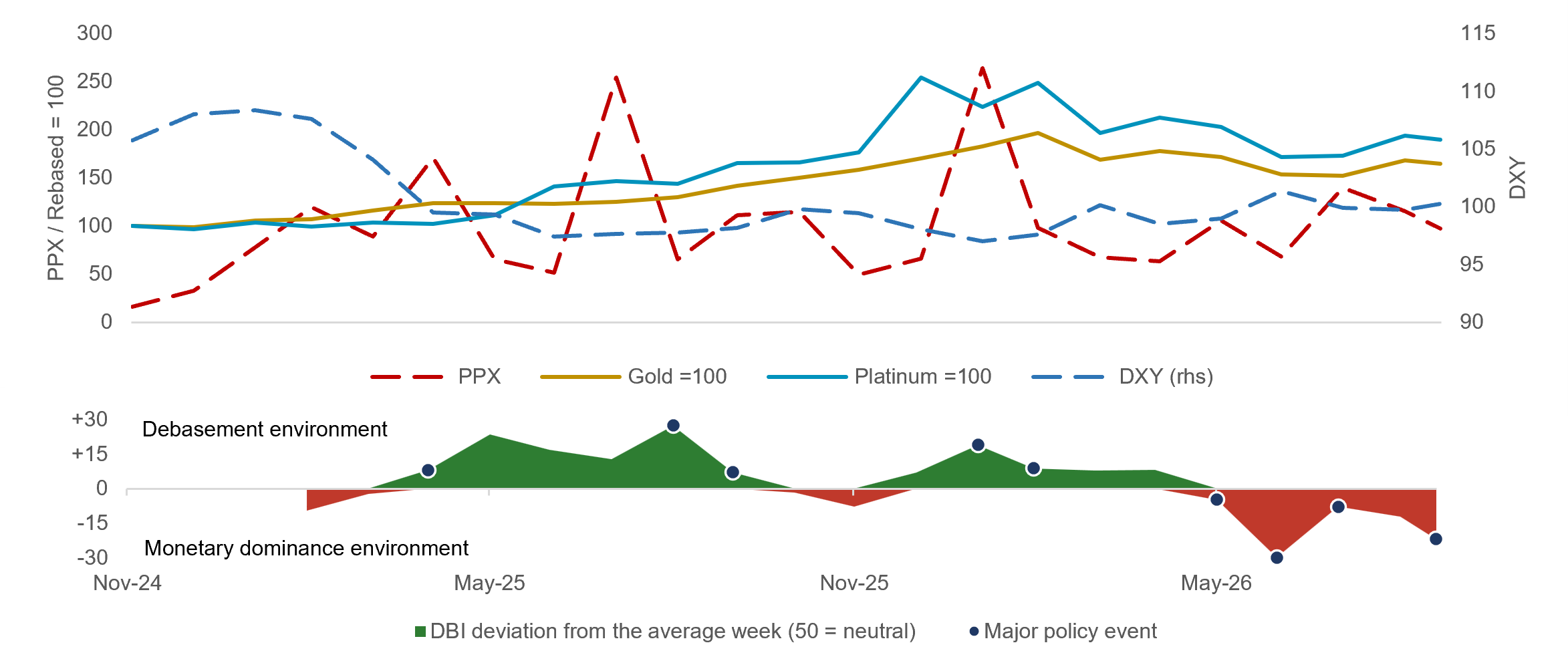
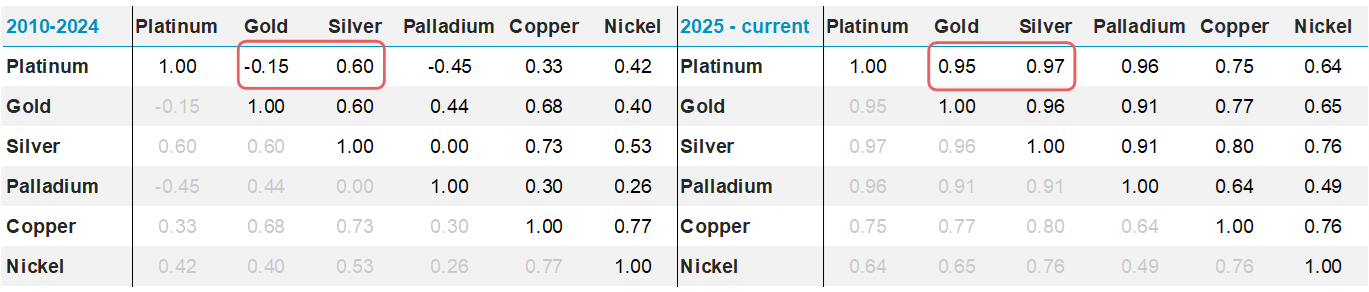
25 August 2026: The macro-economic environment is driving platinum’s market value, accentuated by underlying fundamentals: Platinum and gold have been almost perfectly correlated since 2025, and that relationship - not fundamentals - is likely to dominate the near-term investment case. Despite the potential for a modest platinum market surplus in 2026f, driven by ~750 koz of combined year-to-date ETF outflows and exchange stock reductions, we expect platinum to continue to trend in line with gold, which would likely mean a move higher if the Fed holds off on rate hikes over the remainder of the year. Whilst the market may move towards a surplus, it is unlikely to be sufficient to meaningfully rebuild above ground stocks after multi-year deficits. Consequently, platinum’s underlying fundamentals should not be totally overlooked as they result in it having a higher beta relative to gold.
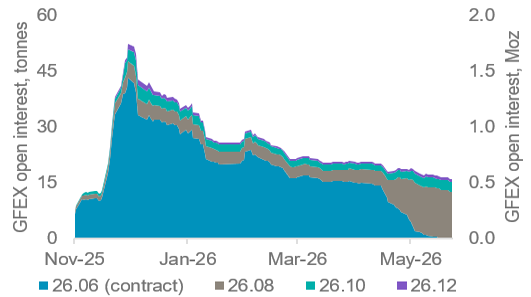
1 July 2026: GFEX platinum and palladium futures supporting liquidity and price discovery in China's evolving PGM markets: Ahead of Shanghai Platinum Week commencing 6 July 2026, we reflect on how China’s market has responded to the launch of GFEX platinum and palladium futures contracts and options. The first GFEX contracts expired in June 2026 and there was evidence of a shift away from SGE. From here, we would expect China to play a larger role in global price discovery once GFEX opens access to international participants.
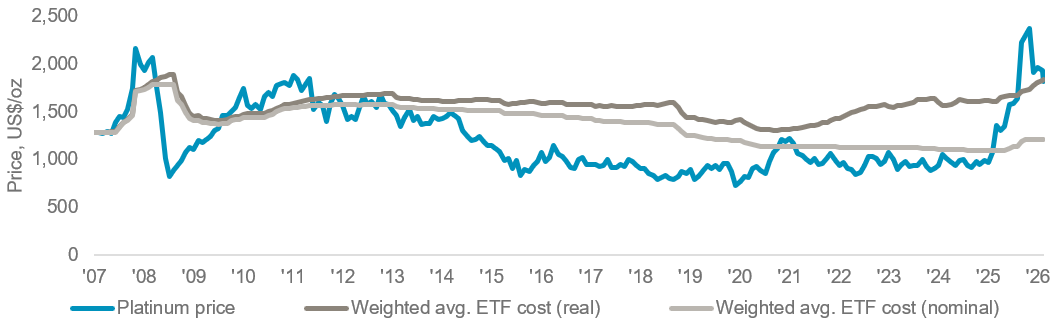
24 June 2026: A hawkish US Fed is a headwind to platinum markets, but there could be signs of a turnaround from late 2026 : In updating our medium-term platinum market forecasts, we highlighted that platinum’s underlying fundamentals were structurally resilient but challenged by negative sentiment linked to inflation and higher interest rate expectations. With an MoU between the United States and Iran signed and the Strait of Hormuz reopening, avoiding second-order inflation impacts from the energy shock could be the catalyst investors need to re-engage with platinum.
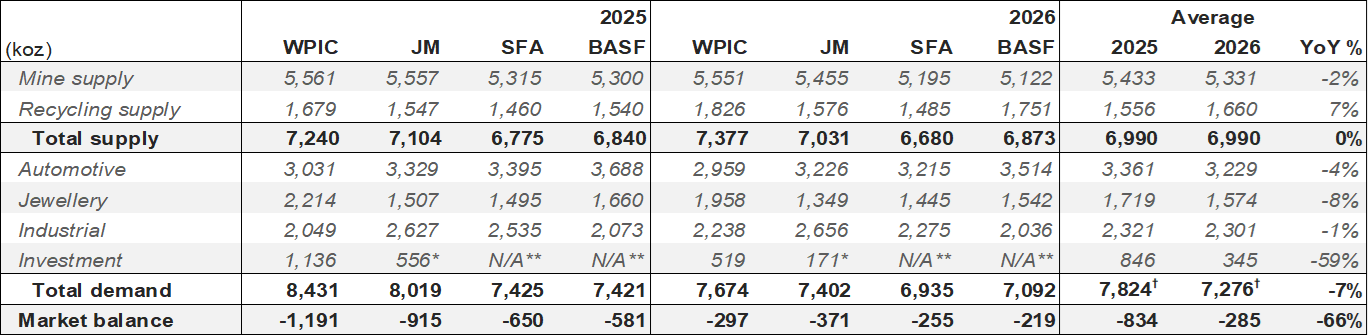
29 May 2026: London Platinum Week Review: Broad confidence on the underlying markets albeit with some Iran war trepidation: The PGM industry gathered for London Platinum Week with confidence on market fundamentals albeit with some Iran war trepidation: Key themes during the week included price resilience during external market uncertainty, recycling supply growth, increasing end uses in datacentres, and the need for more coordinated market development efforts. Against this backdrop, major industry forecasters are all projecting another year of platinum market deficits during 2026.
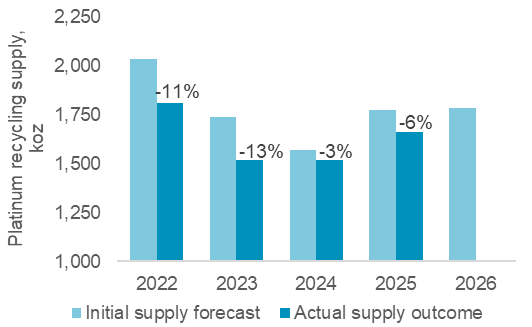
16 April 2026: Higher PGM prices support recycling supply growth, but headwinds remain: Higher PGM prices support recycling supply growth, but headwinds remain: With recyclers citing working capital finance headwinds, and trade flow restrictions across the Middle East, the anticipated price driven supply response from platinum group metals (PGM) recycling may occur at a slower pace than envisioned. Recycling supply missing projections would continue a trend of it underperforming expectations since 2022, reinforcing recognitions of constrained total platinum supply.
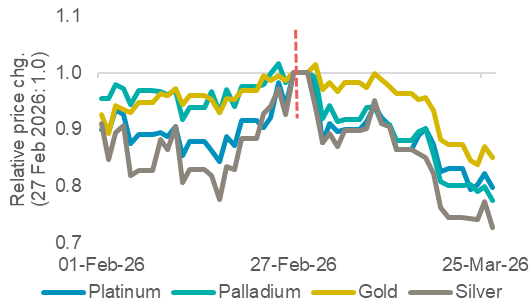
2 April 2026: The Iran War’s direct impact on platinum demand appears modest, but higher interest rate expectations and a stronger US dollar could weigh on investment demand: Iran and the broader Middle East are not large direct platinum markets. Even contagion impacts from the economic drag caused by restrictions across the Strait of Hormuz and the potential for a global helium shortage currently appear modest. At this time, however, the primary risk to platinum stems from the potential for investors to liquidate positions as rising interest rate expectations and a recovering US dollar weigh on broader metals prices.
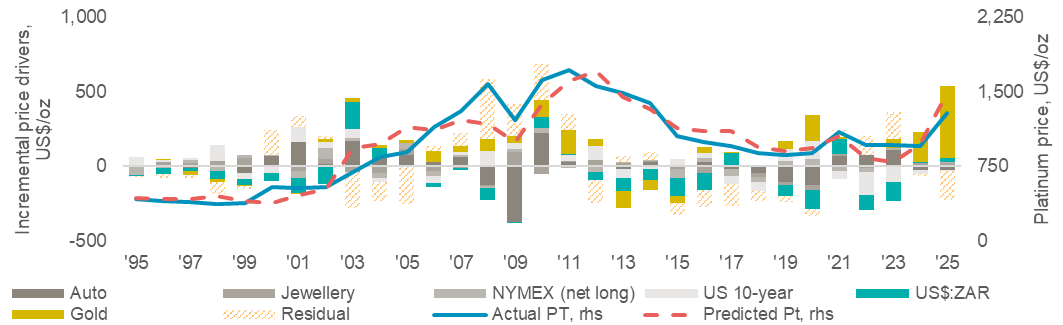
12 February 2026: Factors underpinning platinum’s all time high price remain entrenched: After a final 25% surge, which lasted only three weeks, the record platinum price rally reset between 29 January and 02 February 2026 before finding support levels that lifted platinum back above US$2,000/oz. Platinum’s fundamentals have not changed with a shortage of metal still evident by high lease rates and strong OTC backwardation.
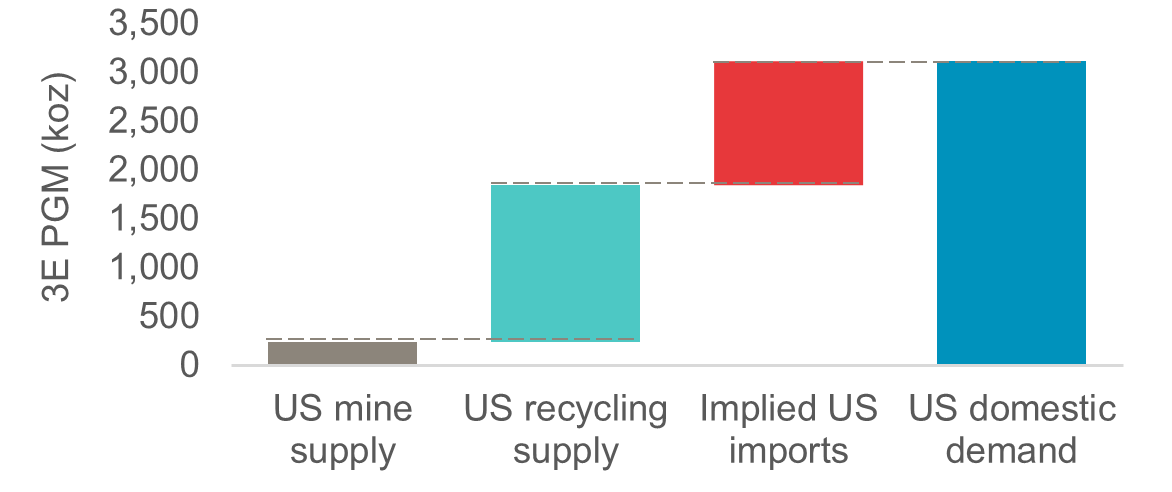
15 January 2026: Some exchange stock unwinding possible on US S232 carrot before stick approach, although trade risks persist: Some exchange stock unwinding possible on US S232 carrot before stick approach, although trade risks persist: A US presidential review of the Section 232 (S232) investigation into critical minerals concludes that action is needed to protect national security. In a softer approach than seen previously, the initial focus is on trade negotiations, while retaining the option to bring in tariffs or quotas. This may present an opportunity to take advantage of the international market tightness by unwinding some of the excess platinum warehouse inventories. However, the capricious nature of the current US administration and uncertain timeline means assuming future metal imports will be unencumbered comes with risks.
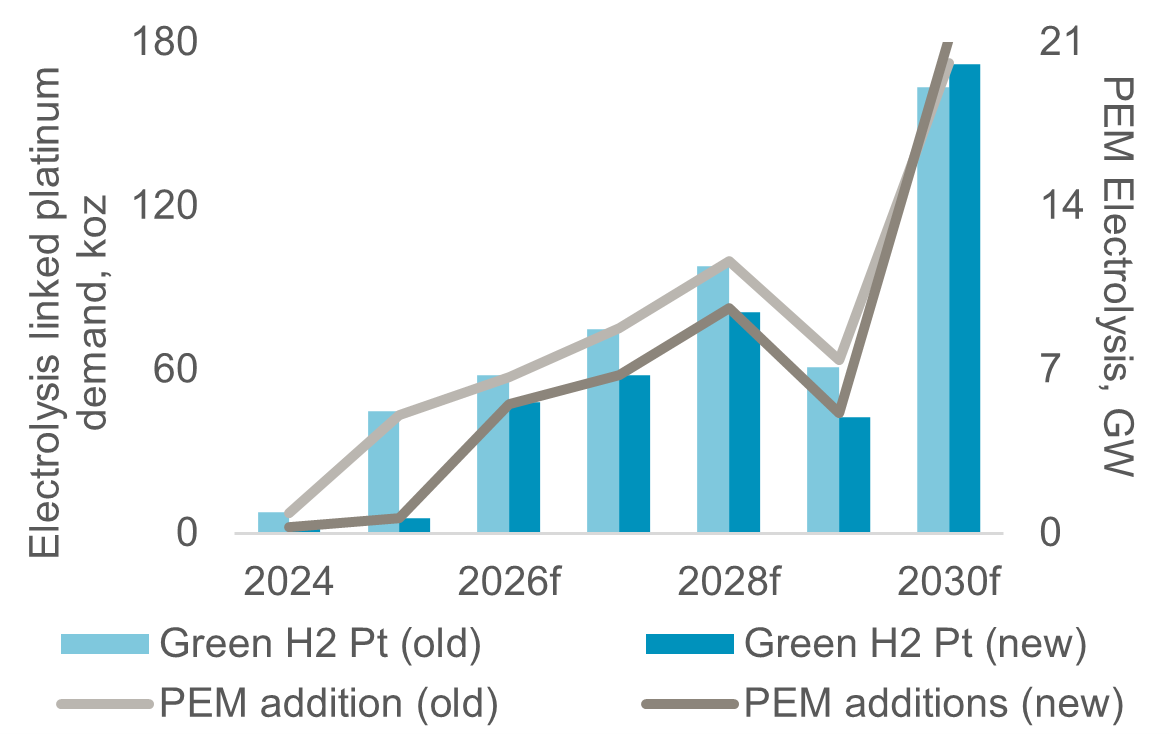
6 January 2026: PEM capacity growth revised downward in IEA update, dampening platinum demand despite rising electrolysis : Downward revisions to PEM capacity in the International Energy Agency’s (IEA) updated hydrogen outlook reduce near-term platinum demand but reinforce platinum’s long-term role in hydrogen: This Platinum Perspectives reviews the 2025 IEA electrolyser update, which shows downward revisions to medium-term capacity additions and modestly reduced PEM deployment. Combined, these reduce the probability adjusted electrolysis demand for platinum by 12% through 2030.