Whether designing for semiconductor applications, a jet engine component or a platinum wedding ring, a reliable way to measure how well a material resists deformation and wear is essential. One of the most widely used methods for doing this is the Vickers test, developed in 1921 by engineers at former British engineering company Vickers Ltd.
Unlike earlier hardness tests, which were limited to specific material types, the Vickers method was designed to be universal. It works by pressing a pyramid-shaped diamond indenter into a material under a known force and measuring the size of the resulting indentation. The smaller the indentation, the harder the material. The result is expressed in Vickers Hardness (HV), a unit now used worldwide across multiple industries.
The significance of the Vickers scale lies in its ability to compare vastly different materials using a standardised method. For platinum group metals (PGMs), this is particularly important because in their pure state, they can lack the hardness required for demanding industrial applications. Platinum, for example, has an HV value of 55 to 60 (compared to 24 karat gold at 25-30 HV) while carbon in the form of diamond has the highest HV value of any elemental material at 10,000 HV. Alloying, the process of combining materials to enhance performance, is therefore an important way of utilising PGMs.
An alloy is a material that is made up of at least two different chemical elements, one or more of which is a metal. Combining and applying these elements to provide the best solution for a given circumstance requires specialist knowledge of metallurgy and an in-depth understanding of chemical reactions and manufacturing processes. The most important metallic component of an alloy, often comprising 90% or more of the material, is called the primary or main metal. The other components of an alloy are present in much smaller quantities, sometimes less than one percent of the total.
Amongst many other applications, PGM alloys are used in chemical processing equipment, semiconductor manufacturing, aerospace systems, catalysts, medical devices and hydrogen fuel cells. These applications require combinations of hardness, corrosion resistance, high-temperature stability and conductivity that no single pure metal can provide.
The importance of hardness can be seen in jewellery fabrication. Platinum 950 alloys are comprised of 95% pure platinum combined with 5% other metals, typically palladium, ruthenium, or cobalt, to achieve hardness values of between 125 HV and 150 HV. This helps platinum jewellery maintain its shape and finish over decades of wear.
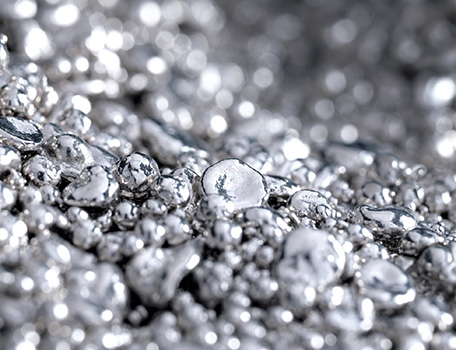
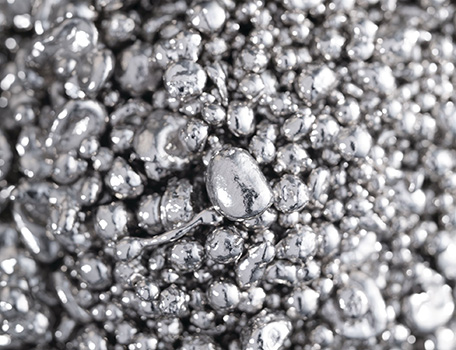
Inoveo Platinum has been developed to be 40% harder than standard platinum alloys. Picture credit: PGI
Key benchmark
Recent developments highlight how hardness remains a key benchmark in materials innovation. TANAKA Precious Metals has introduced TK-SK, a new palladium-based alloy which is 640 HV on the Vickers scale. The alloy was specifically designed to reduce wear and deformation in probe pins used during semiconductor testing, extending component life and lowering maintenance costs.
It also announced the development of a pure platinum material with nano-sized crystal grains that achieves a Vickers score exceeding 500 HV, roughly ten times harder than unalloyed platinum, while retaining exceptional purity. The breakthrough demonstrates that improvements can be achieved not only through alloying but also through advanced control of a material's microstructure during crystallisation.
The Vickers test remains one of the most important tools enabling these advances. By giving scientists and engineers a precise way to quantify performance improvements, it provides a benchmark for material innovation. As researchers develop increasingly sophisticated PGM alloys and nanostructured materials, the Vickers test continues to play a critical role in turning laboratory breakthroughs into commercially viable technologies.